

Modern online life rewards attention and constant stimulation. Learn why independent thinking online matters more than ever. The internet was originally celebrated as one of the greatest democratising forces in modern history.
For the first time, ordinary people could publish ideas, build businesses, access information, learn new skills, communicate globally, and potentially create opportunities previously unavailable to them.
In many ways, that promise was real.
Millions of people have genuinely improved their lives through the internet.
Businesses have been built.
Knowledge has become more accessible.
Communities have formed.
Entire industries have emerged.
And yet despite all of that progress, many thoughtful people increasingly feel a growing sense of psychological tension online.
Not necessarily because they reject technology.
Not because they lack intelligence.
And not because they are incapable of adapting.
But because modern online life now operates very differently from the internet many people originally believed they were entering.
The deeper issue is no longer simply technology.
Environmental technology has been created.
An environment increasingly shaped by algorithms, attention competition, emotional stimulation, visibility systems, behavioral prediction, and constant psychological engagement.
Understanding this distinction may be one of the most important challenges of modern digital life.
Because the internet is no longer merely a tool people occasionally use.
For many people, the internet has become the environment through which they now learn, communicate, compare themselves to others, form opinions, make financial decisions, build identity, seek relevance, and attempt to create economic opportunity.
This is an enormous cultural shift.
In previous generations, many of these activities occurred within slower, more physically grounded environments, such as workplaces, local communities, families, professional networks, and face-to-face relationships.
Today, much of that experience has migrated online.
As a result, digital systems now influence not only how people gather information, but also how they perceive themselves, evaluate success, interpret opportunity, and understand where they fit within a rapidly changing society.
That profoundly changes the psychological experience of being online.

The Internet Economy Increasingly Rewards Attention
One of the biggest shifts of the modern internet era is that attention itself has become an economic resource.
Platforms compete aggressively for engagement because engagement generates advertising revenue, behavioral data, market influence, and platform growth.
This creates incentives that shape how information is presented online.
The content most likely to spread online often stimulates emotion quickly, creates urgency, provokes a reaction, simplifies complexity, reinforces certainty, or encourages continuous consumption.
This does not necessarily mean thoughtful or valuable content disappears.
But it does mean that calmer, more reflective forms of communication often struggle to compete with material specifically designed to trigger immediate emotional engagement.
Over time, this can distort people’s perception of reality.
They begin to feel as though everything online must move faster, sound more certain, or appear more emotionally intense to matter.
That pressure quietly reshapes how many people think, communicate, and evaluate themselves online.
None of this necessarily happens because individuals are intentionally malicious.
In many cases, creators, businesses, and platforms are simply adapting to systems that reward visibility, speed, and emotional engagement.
But the cumulative psychological effect on people can become significant.
Especially for thoughtful individuals attempting to make important life decisions in environments specifically designed to compete for attention continuously.
This is one reason many people increasingly feel mentally exhausted online.
The problem is not simply “too much information.”
Human beings have always navigated large amounts of information.
The deeper issue is that modern online systems often interrupt the reflective processes required for genuine understanding to develop.
People are continuously pushed toward reaction rather than reflection.
Consumption rather than contemplation.
Visibility rather than depth.
And stimulation rather than emotional steadiness.

Why Thoughtful People Often Feel Psychologically Displaced Online
Many thoughtful people feel an instinctive discomfort online that can be difficult to articulate clearly.
The discomfort is not necessarily with technology itself.
Most people over 55 have already adapted to enormous cultural and technological change throughout their lives.
They adapted to computers.
Mobile phones.
Digital banking.
Online communication.
Globalisation.
Automation.
And rapidly changing workplaces.
The idea that older generations simply “cannot adapt” is both intellectually shallow and demonstrably false.
The deeper issue is that many people increasingly feel that modern online environments reward behaviors fundamentally at odds with the values they spent decades developing.
Many people still value thoughtful communication, gradual trust-building, emotional steadiness, careful decision-making, practical experience, meaningful contribution, and a reputation earned slowly over time.
Those values were developed over decades of lived human experience.
People built businesses through consistency.
Relationships through reliability.
And trust through repeated actions observed over long periods.
For many thoughtful individuals, those values still feel psychologically real and deeply important.
The difficulty is that modern online systems do not always visibly reward those same qualities in obvious ways.
But online, people often observe something very different.
Visibility frequently outperforms wisdom.
Confidence spreads faster than nuance.
Strong opinions travel further than thoughtful reflection.
Emotional stimulation attracts more engagement than calm analysis.
And people increasingly feel pressure to constantly market themselves simply to remain visible.
This creates a profound psychological tension.
Not because thoughtful people have nothing valuable to contribute.
But many feel they are being asked to participate in systems that reward behaviors fundamentally misaligned with how they naturally think, communicate, and build trust.
This experience is not limited to older generations.
Increasingly, younger generations are also experiencing digital exhaustion, attention fatigue, emotional overstimulation, and online identity fragmentation.
The difference is that many people over 55 possess enough historical perspective to recognize how unusual this environment actually is.
Why Endless Information Rarely Creates Clarity
One of the great assumptions of the information age was that greater access to information would naturally lead to a better understanding.
To some extent, that assumption was correct.
The internet has dramatically expanded access to knowledge.
But information and understanding are not the same thing.
Information becomes meaningful only when human beings have enough psychological space to interpret, question, compare, reflect, and connect ideas thoughtfully.
Modern online culture often interrupts that process continuously.
People move rapidly from one opinion to another.
One strategy to another.
One headline to another.
One platform to another.
One algorithm update to another.
One emotional reaction to another.
As a result, many people consume enormous amounts of content while quietly becoming less certain of their own judgment.
This helps explain why so many people researching online business, affiliate marketing, side hustles, AI tools, or digital opportunities often feel increasingly confused rather than increasingly confident.
The issue is not necessarily a lack of intelligence.
The issue is that constant information consumption does not automatically create perspective.
In fact, excessive information can sometimes weaken perspective by crowding the mind with conflicting opinions before deeper understanding has time to develop.
This is particularly important for people later in life who are attempting to build something meaningful online.
Many are not simply experimenting casually online.
They are making decisions connected to financial security, retirement, personal relevance, independence, purpose, and long-term stability.
These are not emotionally trivial concerns.
For many people later in life, the desire to build something online is connected to very real questions about the future.
Questions such as:
Will I remain financially secure?
Do my skills still matter?
Can I adapt meaningfully to this changing world?
Is there still a place for thoughtful contribution online?
That emotional weight fundamentally changes the psychological experience of navigating online business later in life.
Those are emotionally significant decisions.
Emotionally significant decisions require more than mere stimulation.
They require clarity.
The Psychological Cost Of Passive Consumption
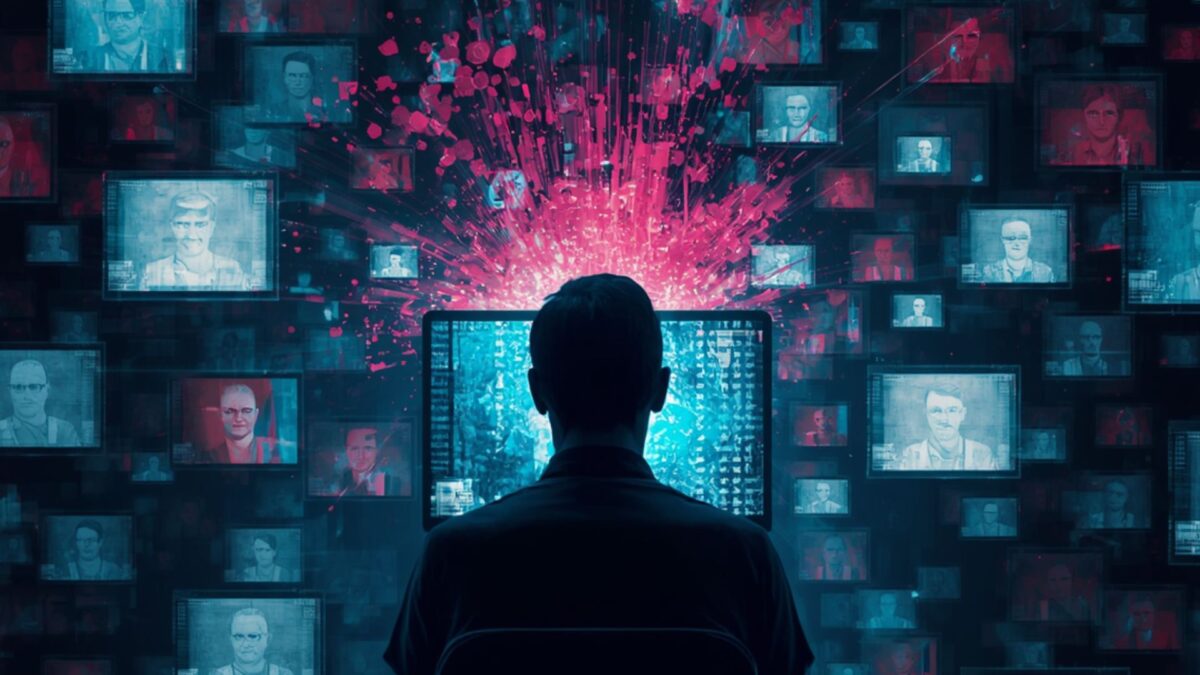
One of the least discussed aspects of modern online culture is the psychological effect of continuous passive consumption.
People can spend entire days watching videos, reading posts, comparing opinions, researching opportunities, listening to podcasts, studying strategies, and consuming endless streams of advice.
At first, this often feels productive.
People believe they are gathering the information necessary to make a good decision.
And to some extent, that instinct is understandable.
Thoughtful people naturally want to evaluate risks carefully before committing time, money, or emotional energy.
But eventually, endless consumption can begin replacing deeper reflection.
People continue gathering information without ever developing enough psychological distance to interpret what truly matters.
The result is that many become mentally active while remaining emotionally stuck.
At the end of the day, many feel mentally exhausted while having made no meaningful decision at all.
This creates a dangerous illusion of progress.
Activity begins replacing understanding.
Consumption begins replacing reflection.
And many people slowly lose confidence in their ability to think independently because they become psychologically dependent on continuous external input.
This may be one reason so many people feel emotionally overwhelmed before they ever begin building anything online.
Not because they are incapable.
But modern digital environments rarely encourage the slower reflective thinking required for grounded decision-making.
Why Independent Thinking Online Matters More Than Ever
As online systems become increasingly sophisticated in shaping attention, influencing behavior, predicting interests, and guiding emotional engagement, independent thinking becomes more valuable — not less.
Independent thinking does not mean rejecting expertise.
It does not mean ignoring education.
And it certainly does not mean pretending wisdom can be developed in isolation.
Good teachers matter.
Experience matters.
Knowledge matters.
But eventually, people must still ask:
What genuinely makes sense for me?
What aligns with my values?
What pace feels psychologically sustainable?
What kind of life am I actually trying to build?
Those questions cannot be answered entirely by algorithms, influencers, trending opinions, or platform culture.
They require reflection.
Interpretation.
Perspective.
And enough psychological distance to think clearly again.
This may ultimately become one of the defining human skills of the digital age.
Not merely the ability to consume information.
But the ability to remain psychologically grounded while deciding what deserves attention in the first place.
What Senior Entrepreneur Hub Stands For
Senior Entrepreneur Hub was never created simply to promote online business opportunities.
It was created in response to a deeper observation.
That many thoughtful people increasingly feel psychologically overwhelmed inside modern online environments while still wanting to adapt meaningfully, remain relevant, contribute value, and build greater independence later in life.
The answer is not to reject technology.
And it is not to romanticize the past.
The internet still offers a genuine opportunity.
Meaningful businesses can still be built online.
Skills can still be learned.
Income can still be created.
But thoughtful adaptation requires more than simply consuming endless advice.
It requires emotional steadiness, thoughtful evaluation, realistic expectations, psychological clarity, and enough independent thinking to avoid becoming completely absorbed by systems increasingly designed to capture attention continuously.
This is one reason SEH places so much emphasis on slowing down, carefully evaluating opportunities, and thinking independently before making major online decisions.
Not because caution means avoiding progress.
But thoughtful participation online becomes extremely difficult once people lose the ability to think clearly beneath the constant pressure of digital noise.
That is the deeper philosophy behind SEH.
Not fear.
Not hype.
But thoughtful participation in a rapidly changing digital world.
Final Thoughts
Modern online life has created an extraordinary opportunity.
But it has also created environments that increasingly compete for human attention, emotional engagement, and psychological dependency.
Many people intuitively feel this tension even if they struggle to explain it clearly.
Especially thoughtful individuals who still value:
- depth,
- trust,
- reflection,
- clarity,
- and meaningful human contribution.
The challenge of the modern internet may not simply be learning how to use technology.
It may be learning to remain psychologically grounded while living within systems increasingly designed to fragment attention continuously.
That is why independent thinking online matters more than ever.