

To Become a Senior Entrepreneur?
When we think about entrepreneurship, we still tend to picture someone relatively young.
Perhaps they are developing an app, building a technology company, working from a laptop, or trying to attract investors to an ambitious new idea. Business media, social media, and the success stories that receive the most attention reinforce this image.
Yet entrepreneurship has never belonged exclusively to the young. People enter entrepreneurship from many directions and at very different stages of life. Some begin because they have identified an opportunity. Others reach a point in their career when they want greater independence.
Some experience redundancy or retirement and begin reconsidering what they want to do next. Others realize that decades of accumulated knowledge and experience may still have considerable value.
For someone over 55, becoming an entrepreneur looks quite different from the conventional image of starting a business at 25.
A person in their 50s, 60s, or 70s is unlikely to approach entrepreneurship with a completely blank canvas. They have already spent decades working, making decisions, dealing with people, solving problems, accepting responsibility, and discovering through experience what they are — and sometimes are not — good at.
That does not mean age automatically makes someone a better entrepreneur. Experience cannot guarantee success, and knowledge acquired during a previous career will not necessarily translate directly into a new business or a digital environment.
But it does mean we should look beyond the stereotype and ask a more useful question:
What does it really mean to become a senior entrepreneur?
And perhaps more importantly:
What might someone over 55 already possess that could help them build something of their own?
A Senior Entrepreneur Isn't Simply an Older Business Owner
Simply put, a senior entrepreneur is someone who begins, develops, or operates an entrepreneurial venture later in life. No one has a universally agreed-upon birthday when someone suddenly becomes a "senior entrepreneur."
Still, the term is increasingly used to describe people who enter entrepreneurship later in their working lives or after leaving conventional employment.
The age itself, however, is the least interesting part of the definition.
What distinguishes later-life entrepreneurship is the background behind the decision.
Someone beginning a business at 25 may have enormous enthusiasm, technical knowledge and time ahead of them, but comparatively little professional or life experience. Someone beginning at 60 may face a completely different set of circumstances. They may have less appetite for financial risk and a shorter time horizon.
They may also possess 30 or 40 years of knowledge about industries, customers, workplaces, relationships, and the practical realities of getting things done.
During those decades, people accumulate capabilities that are easy to overlook because they become part of everyday life. They learn to communicate with difficult people, manage responsibility, recognize unreliable promises, meet deadlines, recover from mistakes, negotiate, solve practical problems, and make decisions when the answer isn't immediately obvious.
They may also have developed deep professional expertise, industry contacts, personal networks, and an understanding of specific problems that someone entering the field for the first time lacks.
That leads to one of the most important distinctions in understanding senior entrepreneurship:
Starting later doesn't necessarily mean starting from zero.
A 60-year-old beginning an online business may be completely unfamiliar with website building, search engines, digital marketing, or artificial intelligence. In those areas, they are genuinely a beginner.
But being a beginner in a particular technology or business model does not erase everything that came before it.
A nurse exploring an online health education business brings decades of understanding of people and healthcare. A tradesperson considering consulting understands the problems customers and contractors encounter.
A teacher moving into online education knows how people learn. A manager developing a service business understands organization, accountability, and communication.
The challenge isn't necessarily to replace everything you've learned. It is often about discovering how to adapt existing knowledge to a new environment.

Experience Still Matters — But It Has to Remain Adaptable
When discussing older entrepreneurs, there's a temptation to swing too far in the opposite direction and suggest that experience itself confers an automatic advantage.
It doesn't.
Experience has value when it remains useful, relevant, and adaptable.
After 30 or 40 years in the workforce, most people have developed a considerable store of practical knowledge. Much of it is difficult to teach because it comes from repeated exposure to real situations. You begin recognizing patterns. You know when a problem is likely to become more serious. You understand that people don't always behave as expected. You become better at separating what is urgent from what is merely noisy.
You have probably also experienced failure in one form or another.
Projects haven't worked. Decisions have proved wrong. People have disappointed you. Circumstances have changed unexpectedly. Careers rarely travel in perfectly straight lines.
Those experiences can create perspective.
A setback at 60 may still be frustrating, but it is unlikely to be the first difficult situation you've encountered. Having survived previous mistakes and disappointments can make it easier to see a business problem as something to analyze and respond to, rather than automatically treating it as a catastrophe.
However, experience becomes a disadvantage if it turns into the belief that there is nothing new to learn.
The commercial environment has changed enormously. Customers research differently. Businesses communicate differently. Technology has transformed how products are marketed, purchased, and delivered. Artificial intelligence is changing how information is created and processed. Entire business models exist today that would have been difficult to imagine during the early years of many senior entrepreneurs' careers.
That means later-life entrepreneurship requires a compelling mix of confidence and humility.
You need enough confidence to recognize the value of your experience, while retaining enough humility to accept that some of what you know may need updating.
A senior entrepreneur, therefore, isn't someone who relies on 40 years of experience. It is someone who can combine that experience with a willingness to continue learning.
Experience gives you something substantial to build upon. Adaptability determines how useful that experience remains.
"It's Never Too Late" — But What Does That Really Mean?
The phrase "it's never too late" comes up often when people discuss entrepreneurship later in life.
Unfortunately, it has become so closely associated with motivational marketing that much of its meaning has been lost.
We often see the same famous examples of people who supposedly prove that extraordinary success remains possible at almost any age. The stories can be interesting, but repeating them doesn't necessarily help an ordinary person decide whether entrepreneurship fits their circumstances.
The fact that somebody built an enormously successful company at 60 tells us one thing with reasonable confidence: age itself didn't prevent that person from succeeding.
It tells us considerably less about what will happen to somebody else.
That distinction matters.
When Senior Entrepreneur Hub says it may not be too late to explore entrepreneurship, we are not suggesting that age ceases to matter, that everyone should start a business, or that accumulated experience guarantees success.
We mean something much simpler.
Reaching 55, 60, 65, or 70 does not automatically rule out entrepreneurship.
Whether it is a sensible option is another question entirely.
Someone approaching retirement may need to protect their capital more than a 25-year-old with decades to recover financially. Someone with family responsibilities may have limited time. Someone who dislikes technology may need to consider how much learning their preferred business model will require. Another person may decide that the demands of building a business no longer fit the life they want.
Those aren't failures of ambition. They are legitimate considerations.
This is why possibility and promise must remain separate.
Possibility says that something can be done.
A promise suggests that a particular outcome will occur.
Entrepreneurship can offer possibilities. Nobody can responsibly promise the outcome.
That distinction matters especially for older people because the consequences of an ill-considered financial decision may be harder to recover from later in life.
So "it's never too late" should not be interpreted as encouragement to rush forward.
It means the door doesn't have to be closed because of the number on your birth certificate.
Whether you walk through it should depend upon what you discover when you investigate what lies on the other side.
The Senior Entrepreneurs We Don't Usually Hear About
The most famous later-life entrepreneurs are not necessarily the most useful people for us to study.
Extraordinary success stories attract attention precisely because they are extraordinary. They make good headlines, but their circumstances may be so different from those of an ordinary person considering a modest business after 55 that meaningful comparison becomes difficult.
Far more interesting are people whose entrepreneurial decisions grew out of recognizable life circumstances.
They had careers.
They raised families.
They developed expertise.
Some experienced redundancy.
Some retired and discovered they still wanted meaningful work.
Some realized a skill they had taken for granted could solve a problem for someone else.
Their stories may never become business legends, but they can help us understand what later-life entrepreneurship actually looks like.
Gail Greatorex — When Professional Experience Becomes the Foundation

Australian Gail Greatorex provides an interesting example because her entrepreneurial journey didn't require her to abandon the expertise she had spent decades developing.
Greatorex had worked for around 35 years in consumer product safety, including extensive experience within the Australian public sector. By the time she left conventional employment in her mid-50s, she had something that could not easily be replicated by someone entering the field for the first time: a deep understanding of product safety, regulation, and businesses' responsibilities to consumers.
Rather than treating the end of her public-service career as the end of the usefulness of that knowledge, she found another way to apply it.
She moved into consulting, helping businesses understand product safety and manage their responsibilities.
What makes her story useful isn't simply the fact that she started a business after 55. If that were all we took from it, we would just be replacing one motivational anecdote with another.
The more interesting question is why she was able to create that business at all.
Her business was connected directly to the knowledge she had accumulated throughout her working life. She understood the subject, the problems businesses faced, and the environment in which those problems occurred.
In other words, entrepreneurship wasn't necessarily a complete reinvention.
It was a different application of existing value.
That raises a useful question for anyone considering entrepreneurship later in life:
What knowledge have you accumulated that somebody else might find useful?
The answer doesn't automatically reveal a business opportunity. But it is a much more productive starting point than assuming you must discover an entirely new identity before you can become an entrepreneur.
Chanin King — Not All Valuable Experience Comes From a Career

Chanin King's story raises another, equally important issue. When we talk about "experience," we often mean professional experience. We look at job titles, qualifications, and careers.
But life develops capabilities in other ways.
King had raised eight children before moving into professional organizing. Managing a household of that size requires considerable organization, planning, prioritization, and problem-solving. Those abilities may not appear on a conventional corporate résumé, but that doesn't make them imaginary.
The interesting entrepreneurial step was recognizing that capabilities developed in one context could provide value in another.
That idea is particularly relevant to people later in life because many underestimate what they have actually learned.
Someone may have spent years organizing a community organization, caring for family members, managing household finances, restoring furniture, gardening, coaching a sport, helping friends with computers, or pursuing a hobby to an unusually high standard.
Because those activities weren't necessarily done for money, they can be dismissed as "just something I do."
Entrepreneurship asks a different question:
Does this knowledge or ability solve a problem, satisfy a need, or provide something another person values?
Again, the answer will not always be yes.
A hobby does not automatically become a viable business simply because somebody enjoys it. Turning an interest into a commercial activity can even remove some of the enjoyment that made the activity worthwhile in the first place.
But King's example broadens the way we think about entrepreneurial resources.
Your useful experience isn't limited to what appeared on your final job description.
Sometimes the capabilities accumulated outside formal employment also deserve examination.
Ozzie Ganoza — When Circumstances Force a Reassessment
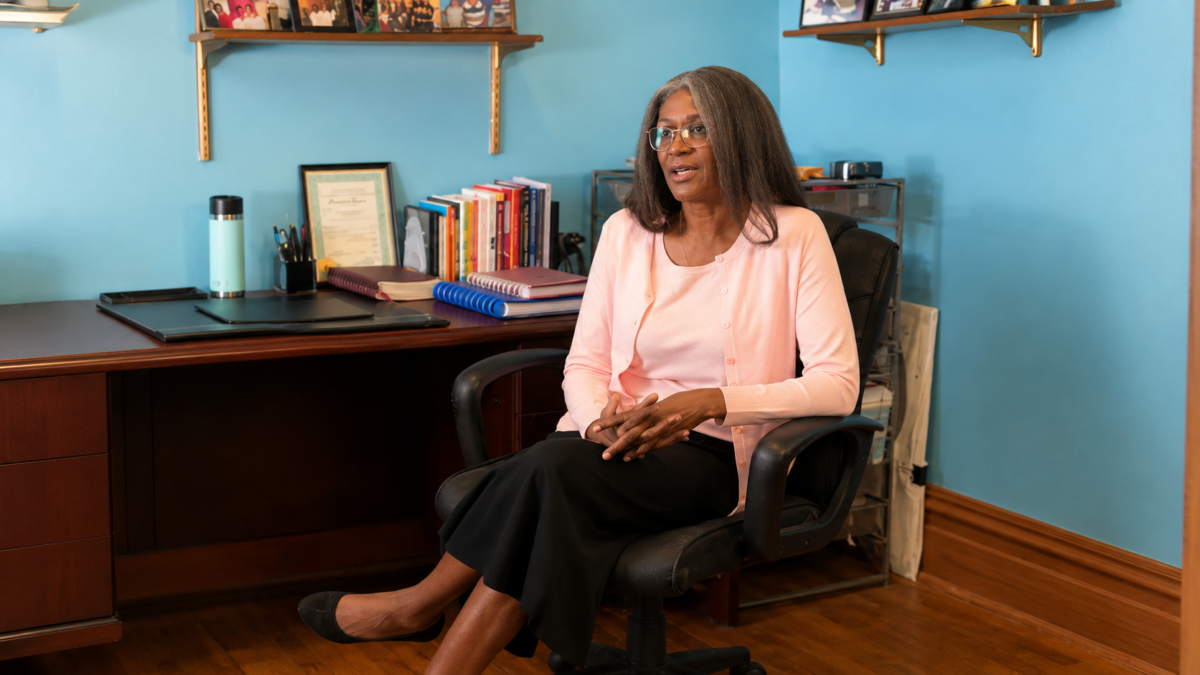
Not everyone becomes an entrepreneur because they have been planning to do so for years.
Sometimes circumstances change first.
Ozzie Ganoza spent more than two decades at a communications technology company before he lost his job. After 22 years in one organization, that kind of disruption represents much more than a change of employer. It can challenge assumptions about security, career direction, and what the next stage of working life should look like.
Ganoza subsequently moved into entrepreneurship.
Again, the useful part of the story isn't that losing a job somehow turned into a guaranteed opportunity. Redundancy can create genuine financial and emotional pressure, particularly later in a career, and romanticizing it would be irresponsible.
The story shows that a major change in circumstances can prompt someone to reconsider options they may have previously ignored.
For some, the best decision will be another job.
For others, retirement may be appropriate.
For others, self-employment or entrepreneurship may be worth investigating.
The important point is that entrepreneurship doesn't always begin with an inspirational moment.
Sometimes it begins with a practical question:
What do I do next?
That question is probably far more relatable to many people over 55 than the conventional story of someone waking one morning determined to "follow their dream."
What These Stories Actually Tell Us
Gail Greatorex, Chanin King, and Ozzie Ganoza followed very different routes.
One demonstrates how professional expertise can serve as the foundation for an independent business. Another shows that valuable capabilities can develop outside conventional employment. The third illustrates how changing circumstances can force someone to reconsider what work and independence might look like later in life.
None of those stories tells us that the reader should become an entrepreneur.
And none tells us what would happen if they did.
Their value lies somewhere else.
They encourage us to examine the resources, circumstances, and motivations that exist before someone starts.
What did this person already know? What did they need to learn? Why did they decide to begin? What problem were they trying to solve — for themselves or for somebody else? What risks did they have to consider? And how did their previous life influence the business they eventually built?
Those questions are much more useful than simply asking how much money somebody eventually made.
They shift the conversation from admiration to evaluation.
Success Doesn't Have to Mean Building an Empire
Once the business's purpose is clearer, another question remains: what would success actually look like?
Modern entrepreneurial culture tends to make that question appear easier than it really is. The most visible business stories are usually measured through revenue, rapid growth, audience size, company valuations, and personal wealth.
These measurements have their place, particularly when assessing the performance of large commercial organizations, but they represent only one interpretation of entrepreneurial success.
For someone starting later in life, the objective may be much more personal and much more modest. That does not make it less legitimate.
A person approaching retirement might want a business that generates additional income without requiring full-time hours. Others may want to transform specialist knowledge from a long career into consulting or education, or value the stimulation of learning new skills and solving problems. Some may want greater control over when, where, and how they work after decades within organizations.
Purpose can matter as well. Leaving a long career sometimes means losing more than employment income. Work can provide structure, professional identity, relationships, and the satisfaction of knowing that our knowledge or contributions matter to someone else. A small business can help maintain those elements of working life while allowing considerably more control over how much space work occupies.
This produces a very different way of evaluating business performance.
Imagine someone who builds a small consulting business that provides useful supplementary income while requiring only 15 hours of work each week. Compared with a technology company pursuing millions of dollars in annual revenue, that business may seem insignificant. Measured against the owner's objective of maintaining professional involvement, generating additional income and retaining enough time for family, travel and other interests, it may be extraordinarily successful.
The reverse can also be true. A business might generate impressive revenue while demanding so much time, financial exposure and emotional energy that it undermines the very reasons its owner wanted greater independence in the first place. Financial performance alone would tell only part of that story.
For senior entrepreneurs, this distinction matters because later life often brings clearer priorities. After decades of employment, family responsibilities, and financial commitments, many people have a much better idea of what they value and what they no longer want their lives to revolve around.
That means success doesn't necessarily have to be defined by continually growing the business.
It might be defined by making the business appropriate.
Appropriate to the income you need, the hours you want to work, the level of responsibility you are prepared to accept, the financial risk you can comfortably carry, and the life you want outside the business.
No universal formula exists for getting that balance right. Someone who genuinely wants to build a large organization should not be discouraged simply because they are older. Equally, someone who wants a modest, sustainable enterprise should not be made to feel that their ambition is somehow inadequate because they aren't trying to build an empire.
The important measure is whether the business achieves the purpose for which it was created.
After 55, one advantage of experience is recognizing that more is not automatically better. A business should serve a purpose within your life. Your life should not automatically become subordinate to the business's demands.

Starting Later Comes With Different Considerations
Recognizing the potential advantages of experience should never prevent us from acknowledging the practical realities of starting later.
Financial risk is one of the most obvious.
A younger entrepreneur who loses money may have decades of employment ahead in which to rebuild savings. Someone approaching or already in retirement may not have the same recovery period.
That doesn't mean older people should never invest in a business. It means the decision deserves proportionate care.
Retirement savings, housing security and essential living expenses should not be casually placed at risk because someone has been persuaded that entrepreneurship provides a guaranteed route to additional income.
Time also has a different meaning.
A 25-year-old may be prepared to spend five or ten years building a company before seeing significant results. Someone at 65 may ask whether they want to devote that much of the next decade to a business.
Technology creates another consideration.
Many people over 55 use technology confidently every day. Others don't. Neither should be stereotyped. What matters is whether the person is prepared to learn the tools the business requires.
And then there is lifestyle.
A person who spent decades working long hours may have absolutely no interest in taking on another job.
They may want to travel, golf, spend time with grandchildren, volunteer, pursue hobbies, or have more control over their week.
A business that destroys those priorities isn't necessarily successful merely because it makes money.
The right business at 60 or 70 may therefore look very different from the business you would have wanted at 25.
That's not a compromise.
It is the consequence of knowing more clearly what you want your life to contain.

Becoming an Entrepreneur Starts Before You Start a Business
One of the most damaging assumptions about entrepreneurship is that progress begins when you spend money. It is easy to believe that taking action means buying a training course, registering a business, purchasing software, building a website, choosing a product, or starting an advertising campaign. Those things can certainly become part of building a business, but none of them necessarily tells you whether you have chosen the right business in the first place.
The more important work begins earlier. Before deciding how to build a business, it helps to understand why you want one and what you expect it to contribute to your life.
For someone over 55, there can be many different answers to that question. Additional income may matter, particularly for someone considering retirement and looking to strengthen their financial position. Another person may already have sufficient financial security but still want meaningful work, intellectual stimulation or the opportunity to put decades of accumulated knowledge to use.
Someone who has experienced redundancy may be considering self-employment because returning to conventional employment has become difficult or simply less attractive. Others may have spent years identifying a particular problem within an industry and reached the point where they believe they can provide a better solution themselves.
Another group arrives at entrepreneurship in a very different way. They encounter an online opportunity, business model, or training program and begin wondering whether it could work for them. There is nothing inherently wrong with discovering entrepreneurship this way, but it makes evaluation particularly important. The attraction of an opportunity should not be confused with evidence that the opportunity suits the person considering it.
These different motivations matter because they lead towards very different decisions. Someone primarily interested in supplementing retirement income may want a relatively small business with limited overheads, manageable risk and the flexibility to work around an existing lifestyle.
Someone seeking a new professional challenge may be prepared to invest considerably more time developing specialist skills. Another person may want to build something substantial that can eventually employ others or be sold. All three can legitimately describe themselves as entrepreneurs, but the businesses they should consider may look completely different.
This is why defining the objective comes before choosing the vehicle.
Once someone understands what they are trying to achieve, the practical questions become much easier to examine. Available time matters because every business requires some form of commitment. Financial risk matters because the consequences of losing capital later in life can differ markedly from those faced earlier in a career. Existing knowledge matters because it may shape which opportunities feel like a natural starting point, while knowledge gaps reveal what to learn.
Uncertainty is another factor. Entrepreneurship rarely provides the predictability of receiving a regular salary. Income can fluctuate, strategies sometimes fail, and progress may take considerably longer than expected. Someone considering entrepreneurship, therefore, needs to think not only about whether they can build a business, but also whether they are comfortable with its realities.
Perhaps most importantly, the proposed business needs to fit the life the person actually wants to live. Leaving a demanding career in search of greater independence has little value if it leads to a business that demands even more time, pressure, and responsibility. Later-life entrepreneurship should not automatically mean recreating the working conditions someone has spent years looking forward to leaving behind.
This is why becoming an entrepreneur begins before the business itself exists. It begins with understanding your circumstances, defining what you are trying to achieve, and evaluating whether a particular opportunity can realistically take you in that direction.
The first investment is not necessarily money. It is thought.
Before You Decide, Ask Better Questions
Seeing another senior entrepreneur succeed can be useful because it establishes possibility.
But possibility should lead to investigation, not immediate commitment.
Someone else's story cannot tell you whether entrepreneurship is right for you because they don't share your finances, experience, family responsibilities, personality, objectives, or appetite for risk.
They can show you what happened to them.
Your job is to determine what makes sense for you.
That requires better questions.
What are you genuinely trying to achieve?
What would a satisfactory outcome look like?
What are you prepared to learn?
How long are you prepared to work before expecting meaningful progress? How will you distinguish legitimate training from exaggerated promises? What kind of business model fits your skills and circumstances?
And perhaps most importantly, what information do you need to make a confident decision?
Asking those questions isn't evidence of hesitation or lack of ambition.
It shows you are taking the decision seriously.
Perhaps the Better Question Isn't "Am I Too Old?"
There is no useful universal answer to the question, "Am I too old to become an entrepreneur?"
Age matters, but it is only one factor among many.
Your health, finances, responsibilities, skills, expectations, available time, willingness to learn, and reasons for considering entrepreneurship may matter considerably more.
Later life provides perspective.
You have had time to discover what matters to you. You have probably learned that attractive promises don't always survive closer examination. You have experienced enough change to know that learning doesn't stop simply because formal education ended decades ago. And you may have accumulated knowledge whose value you haven't fully considered.
None of that guarantees that entrepreneurship is the right next step.
It simply means the question deserves more thought than an automatic "I'm too old" or an equally automatic "It's never too late."
Perhaps the better question is:
Do my experience, circumstances, expectations, and willingness to learn make entrepreneurship worth exploring?
You don't need to know the answer immediately.
And you certainly don't need to spend money or commit to a business to find out.
You can investigate, learn, ask questions, and evaluate different approaches. After doing that, you are perfectly entitled to decide either that entrepreneurship interests you or that it doesn't.
Informed choice is the objective.
If one of the possibilities you are considering is affiliate marketing, Senior Entrepreneur Hub has developed a guide specifically to help with that evaluation.
Affiliate Marketing After 55 — Answers to 10 Essential Questions Before You Begin examines the questions we believe someone should understand before deciding whether this particular online business model deserves further consideration.
Not because you need to begin.
Because if you're going to make that decision, you deserve enough information to make it with your eyes open.
Clarity before commitment. Learning before earning.