

Learn how to start affiliate marketing after 55 with this step-by-step guide. Discover the right way to build an online business based on trust, learning, and experience.
Deciding to explore an online business after 55 is rarely about searching for overnight riches. For most people entering this stage of life, it is about creating financial autonomy, staying mentally active, securing an additional stream of income, or building a flexible venture that fits around family and lifestyle priorities.
By now, you likely understand what affiliate marketing is in theory and how the basic business model functions. The next question is obvious: how do you actually get started?
This is precisely where many beginners become overwhelmed. One website tells you to build a complex blog. Another insists you must launch a YouTube channel immediately. Someone else claims you cannot move forward until you have spent weeks finding the "perfect" hidden niche. It is no wonder so many people feel confused and paralyzed before they have even taken their first real step.
The good news is that getting started is far simpler than the internet often makes it appear. You do not need technical wizardry or a background in digital sales. The key is to begin in the right order.

Step 1 — Start With Learning, Not Selling
The most important decision you can make at the very beginning of your journey is to establish a clear personal philosophy: learn before you earn.
Many people rush into the digital space with an urgent desire to start selling immediately. They attempt to place referral links across social media platforms or publish hasty product reviews before they even understand the mechanics of online trust. This approach almost always leads to frustration, burnout, and early failure.
When you prioritize learning over immediate selling, your entire perspective shifts. You permit yourself to operate as an apprentice. You focus on mastering fundamental skills—such as clear written communication, basic website management, and audience research—without the self-imposed pressure of demanding instant financial returns. By treating this phase as an educational foundation, you protect your confidence and build a business that lasts for years, not just weeks.
Step 2 — Choose a Topic You Genuinely Care About
Conventional marketing guides often tell beginners to search for the "highest-paying niche" or pursue trending products with massive profit margins. For an entrepreneur over 55, this is often a trap.
Instead of hunting for commercial shortcuts, choose a topic you genuinely enjoy learning about and discussing. True authority and online expertise are not qualities you must possess on day one; they are attributes that grow naturally over time. When you select a subject that aligns with your real-life experiences, personal hobbies, or long-standing interests, the process of researching and writing remains engaging.
Consistently creating content around a topic you care about feels like a fulfilling project, not a chore. Readers can instantly spot genuine enthusiasm, and that authenticity forms the bedrock of online credibility.

Step 3 — Understand Your Audience
Once you have identified your broad topic, the next step is to gain absolute clarity on who you are actually serving. Successful affiliate marketing is never about broadcast selling to a nameless crowd; it is about offering tailored guidance to a specific person who is seeking answers.
Ask yourself what specific problems, frustrations, or goals your prospective readers possess. Are they looking to simplify a complex retirement process? Are they trying to pick up a new skill, navigate new technology, or find reliable equipment for a personal hobby?
When you frame every article and recommendation around solving real human problems, your work acquires immediate purpose. You cease being a seller and become an indispensable guide who simplifies choices for others.
Step 4 — Learn Before Joining Programs
Most traditional affiliate guides push beginners to sign up for dozens of affiliate networks—such as Amazon Associates or various digital marketplaces—on their very first day.
A far more sensible strategy is to understand how the business functions before you apply to a single partner program. Affiliate programs exist because companies need genuine, qualified referrals from trusted sources. They do not exist to provide automated payouts to brand-new websites with no content or visitors.
By taking time to understand why these programs exist, how tracking links work, and what merchants expect from their partners, you position yourself as a professional. Once you have built a basic web presence and published helpful initial content, you can carefully evaluate and join affiliate programs, selecting only those that align seamlessly with your standards and your audience's needs.

Step 5 — Build a Simple Platform
To connect with readers, you need a single digital space to publish your work. Beginners are often told they must manage a website, run a YouTube channel, maintain an active Facebook presence, and launch an email newsletter all at once. Attempting this immediately leads straight to burnout.
While platforms like YouTube, email lists, and social media groups each offer unique strengths, you should choose one primary platform to master first. For most mature entrepreneurs who value long-term ownership and stability, a simple, clean WordPress website is the ideal home base.
A dedicated website gives you total control over your content and layout without relying entirely on changing social media algorithms. Keep the structure simple, prioritize high readability with large fonts, and ensure visitors can easily navigate your articles without being bombarded by flashy distractions.
Step 6 — Create Helpful Content Consistently
This is the foundational engine of your entire venture. Everything in affiliate marketing revolves around helping people, not chasing search algorithms or forcing sales commissions.
Your primary goal when publishing an article should always be to leave the reader better informed than when they arrived. Focus your energy on creating practical guides, thorough comparisons, and clear explanations that answer the exact questions your audience is asking.
Core Principle: When you focus entirely on solving problems and bringing clarity to your readers, trust follows automatically. And when trust is established, business results naturally take care of themselves.
Consistency matters far more than volume. Publishing one thoroughly researched, helpful article every week will yield far better long-term results than rushing out several superficial posts that offer no real depth.
Step 7 — Recommend Products You Believe In
Only after you have established an educational foundation should you begin integrating specific product recommendations into your content.
In the digital world, trust is your most valuable currency. Recommending a low-quality product simply because it offers a high commission rate will permanently damage the credibility you worked hard to build. Every product or service you feature should be something you have personally evaluated, vetted, or used with confidence.
When your audience recognizes that your recommendations are deliberate, honest, and designed to protect their best interests, they will willingly follow your advice.
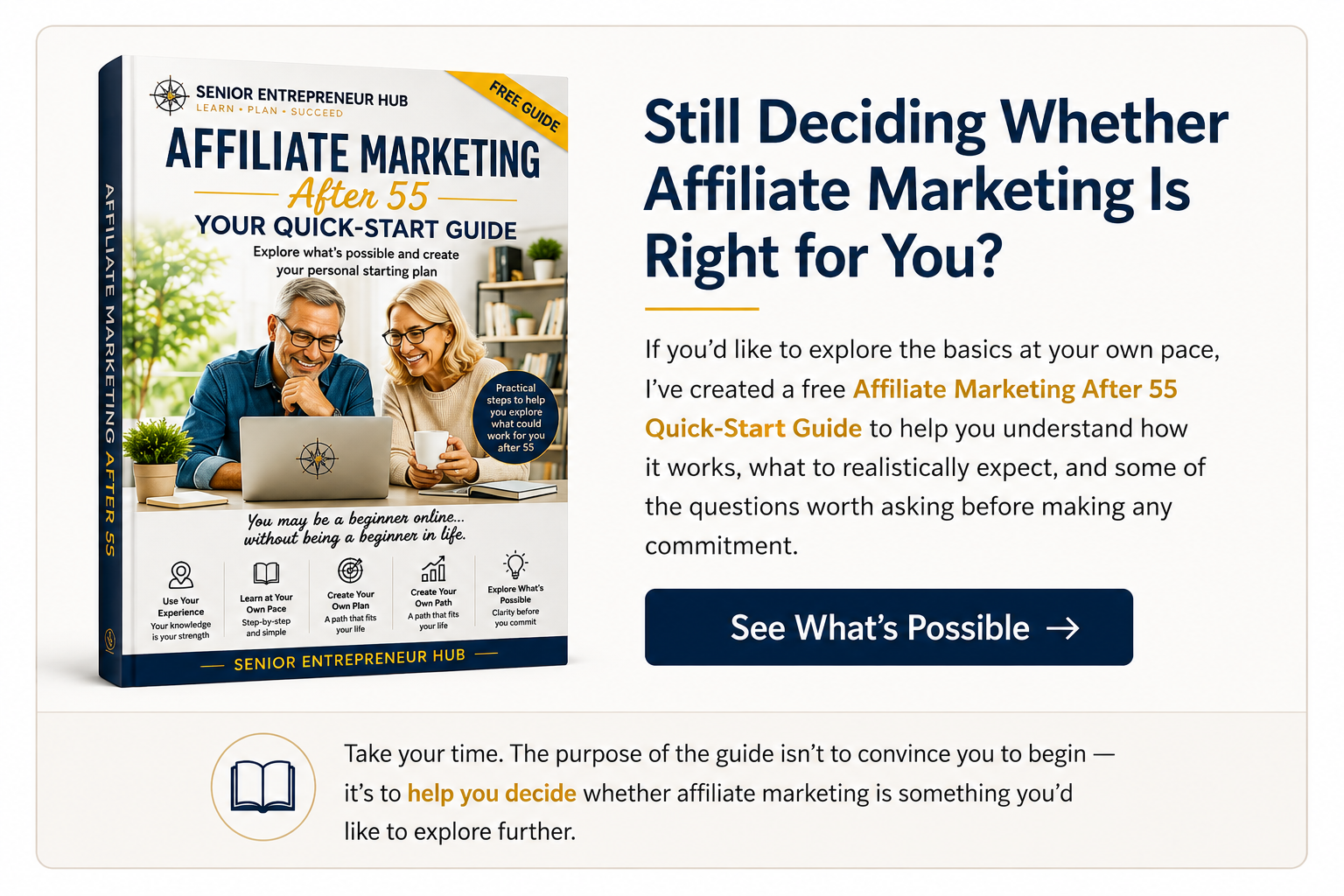
That exact commitment to structure, transparency, and high standards is why I encourage beginners to start with education before committing to a particular program. Building an understanding of how affiliate marketing works makes it much easier to evaluate opportunities and decide what genuinely fits your goals.
Common Mistakes Beginners Make
Understanding what to avoid is just as crucial as knowing what steps to take. Most beginners who fail do so not because they lack capability, but because they fall into predictable traps:
- Expecting Immediate Financial Returns: Treating an online business as a lottery ticket leads to early disappointment. Real business assets require time to mature.
- Joining Too Many Programs at Once: Signing up for dozens of affiliate platforms creates administrative clutter and scatters your focus before you have built an audience.
- Switching Strategies Every Month: Jump-starting a new method every time you see a flashy alternative prevents you from building momentum in any single direction.
- Comparing Yourself to Veteran Marketers: Comparing your day one to someone else's year five creates unnecessary self-doubt and ignores the value of your own learning curve.
- Collecting Courses Without Applying Knowledge: Purchasing courses after courses without implementing what you have learned creates a false sense of progress while keeping you stuck at the starting line.
My Personal Experience
Looking back on building a digital presence, I wish someone had explained early on that creating an online business was never about finding clever shortcuts or technical tricks.
It was always about developing fundamental skills that enable you to help people consistently over time. Once that reality set in, the internet noise quieted down, and the path forward became infinitely clearer. Building a business after 55 is not a sprint against younger generations; it is a deliberate, structured process where your maturity and patience are your greatest assets.
Why I Recommend Starting With Affilorama
One of the main reasons I recommend Affilorama to beginners is that you can start learning without immediately committing to an expensive training program.
Affilorama has been teaching affiliate marketing since 2006, and its free membership gives beginners access to training covering many of the fundamentals needed to understand how the business works.
Rather than simply telling you to find products and start promoting them, the training explores the broader process — choosing a direction, understanding your audience, creating useful content, attracting visitors, and learning how the different parts of affiliate marketing fit together.
That makes it particularly suitable for the approach we encourage here at Senior Entrepreneur Hub: learn first, understand what you're getting into, and then decide whether you want to take the next step.
There is no need to rush that decision.
You can begin with the free Affilorama training, explore the lessons at your own pace, and use what you learn to decide whether affiliate marketing is something you genuinely want to pursue.
For someone starting from the beginning, I believe that's a sensible place to start.

Practical Checklist: Before You Begin
Before publishing your first official review or applying to affiliate programs, review this simple operational checklist to ensure your foundation is solid:
- Step 1: Choose a broad topic area that you genuinely enjoy researching and discussing.
- Step 2: Commit to an apprenticeship mindset focused on skill acquisition over instant profits.
- Step 3: Select and set up a single primary platform, such as a simple WordPress website.
- Step 4: Draft and publish your first helpful, educational piece of content.
- Step 5: Gather initial feedback, refine your publishing routine, and maintain consistency.
Frequently Asked Questions
Do I really need a website to start?
While you can technically share affiliate links on social media or video platforms, a simple website is strongly recommended. A website is a digital asset that you completely own and control, protecting you from sudden policy or algorithm changes on third-party platforms.
Can I start affiliate marketing for free?
You can learn the core concepts and plan your strategy for free. However, running a professional business will eventually require minimal foundational investments—such as securing your own web domain name and basic website hosting—which typically costs only a few dollars per month.
Am I too old to start affiliate marketing after 55?
Absolutely not. In fact, mature entrepreneurs bring decades of life experience, communication skills, patience, and a real-world perspective that younger marketers often lack. Readers consistently gravitate toward authenticity and lived wisdom.
How much time should I expect to invest each week?
When you're starting, 5 to 10 hours of focused, uninterrupted time per week is enough to learn the fundamentals, manage your platform, and publish consistent, high-quality content.
Conclusion
Starting an affiliate marketing business after 55 is not about taking a dramatic, risky leap into the unknown. It's about taking the right first step, followed by another logical step, in a clear and deliberate sequence.
If you embrace the learning process, stay patient with your growth, and focus on helping your readers make better decisions, you will build a solid digital venture on a far stronger foundation than chasing shortcuts could ever provide.
Now that you know how to get started, the next question many beginners ask is: Can You Really Make Money With Affiliate Marketing?