

Am I Becoming Irrelevant At Work?
The Question Nobody Wants To Ask
Am I staying relevant at work?
Are you worried about becoming irrelevant at work as technology and workplace culture rapidly evolve? Discover actionable strategies for experienced professionals to stay relevant, leverage their unique value, and confidently adapt to the modern workplace.
Here are some direct strategies for experienced professionals to reinforce their unique value and adapt confidently to ongoing changes.
Even the most accomplished professionals quietly worry about keeping their value as the workplace rapidly changes. Beneath career success, this question persists: Am I still relevant? This is ultimately about maintaining personal impact.
We stay silent because admitting this fear feels like defeat. It suggests the world has outpaced us. Every day, the workplace changes at an exponential rate. The real friction is not a lack of skills but a personal crisis of values, contribution, and identity.
When The World Around You Starts To Change
Watching an industry evolve from the inside is disorienting. It begins subtly. A new software platform is introduced. Communication styles shift. Soon, the office will use a language filled with acronyms and jargon that didn't exist five years ago.
New technologies bring new expectations for speed. New generations enter the workforce with different norms and instinctive digital skills. A veteran professional can feel stranded, speaking a fading dialect in a room they once commanded.

Why Relevance Matters So Much To Us
This shift stings because, for most accomplished professionals, work has never been merely a way to earn income. Over a career spanning twenty, thirty, or forty years, work weaves itself into the very fabric of our identity.
Our sense of self is rooted in our ability to contribute. We shoulder heavy responsibilities and work with purpose. We thrive on peer recognition and satisfaction from a job well done. Questioning our relevance feels like a threat to our identity. If we are no longer central, a deeper question emerges: Who am I without it?
The Invisible Comparison Taking Place
Humans are hardwired to compare. The modern digital workplace is a relentless arena for this. Experienced workers compare themselves against younger colleagues who seem to learn new systems effortlessly. They also compare against fast automation tools and the specter of artificial intelligence.
Constant benchmarking takes an emotional toll. The problem is structural. Visible skills attract quick attention, while invisible strengths—like knowing when to avoid a faulty project—are overlooked.
The Difference Between Visibility And Value
Many confuse visibility with value. To stay relevant, consistently deliver the strategic judgment only you can provide. Your lasting relevance rests on unique, experience-driven contributions—not just speed.
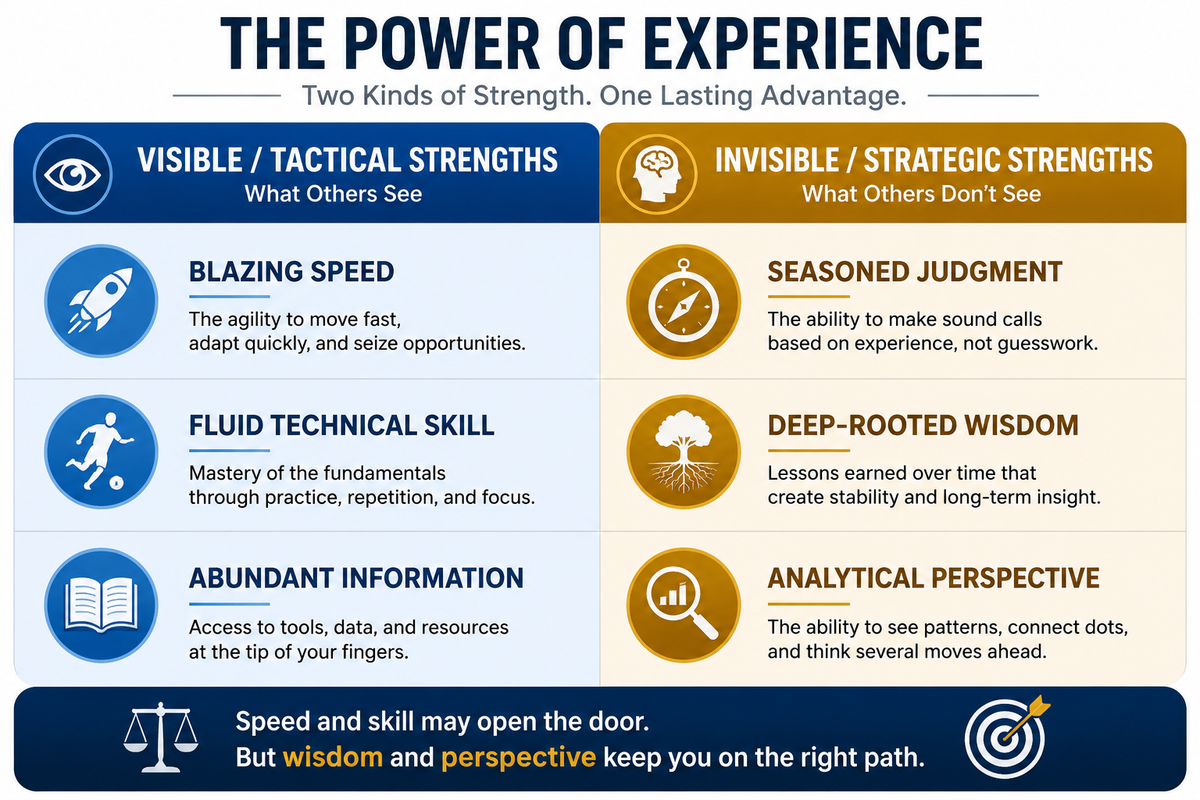
A younger worker may pull data three times faster, showcasing visibility. Yet, raw information without perspective can become a liability. Experience brings context and judgment. Unfortunately, organizations often confuse visible technical skill with deep value—an error revealed only when seasoned expertise departs, often leading to preventable crises.
What Experience Actually Creates
What is this invisible value? It is the compound interest from a lifetime spent navigating human complexity. Experience gives high-level pattern recognition. An expert can see a chaotic market or broken team and instantly know the issue. They have seen it before.
Experience adds seasoned decision-making, emotional maturity, sharp risk awareness, and resilience under pressure. These traits can't fit in a software manual. They are hard to teach and impossible to download.

Why Experienced Professionals Misjudge Their Own Value
Despite possessing rare assets, experienced professionals can be their own worst critics. During transitions, the human brain distorts reality. We focus on what we don't know and forget what we do know.
A veteran sees new tools and feels a skills gap, often missing their key strength: understanding the problems these tools solve. Self-doubt makes us overvalue new tools and undervalue skilled use.
The Real Fear Beneath The Surface
If we are honest, the core anxiety is not about technology. The true fear is becoming unnecessary. It is the worry that we can't move the needle or are overlooked in meetings. It feels as if our decades of work no longer matter.
Recognizing these fears is the first step to regaining your sense of contribution and agency. Acknowledge your value—this understanding allows you to navigate change with more confidence.
Relevance In A Changing World
Relevance in a changing world means identifying and focusing on your unique value—continuously making experienced contributions and strategic judgments that matter as the workplace evolves.
To stay relevant, adapt your experience to new environments and seek high-leverage ways to contribute. Focus on roles where your strengths are essential and appreciated.
Perhaps The Question Is Wrong
The central question is not 'Am I becoming irrelevant?' but 'Where does my experience create the most value now?' Focus on maximizing the impact of your unique contributions today.
The better, far more empowering question to ask is: "Where does my experience create the highest value today?"
As time moves forward, your contribution and relevance will shift, but your capacity to solve complex problems and provide sound judgment will always matter.
Key takeaway: Combine your experience, wisdom, and adaptability to drive meaningful outcomes. Start today—identify one new way to apply your strengths and ensure your continued impact now and in the future. Remember, your value grows as you adapt and continue delivering strategic results.